The shape of things to come
A brighter future for people and planet

This week marks a major work deadline for me, with the final draft of a project due tomorrow that’s been the best part of a year in the making. Despite the long lead-time it’s now a sprint to the finish to get everything done and off to the publishers tomorrow. I’ve been working long days, then dealing with the house move on the weekends and it’s fair to say I’ve just about had it.
It’s late, I’m tired, grumpy and in serious need of a massage, and I still need to do the dishes before bed. Despite a valiant attempt at writing something thoughtful about electricity costs there is no finished blog post tonight. I’m accepting defeat and prioritising getting some sleep.

One more long day tomorrow and I should be done. This weekend I shall sleep and sleep until I am no longer a tired and grumpy little fish. Unlike the gruff old fellow above, the grumpy look doesn’t sit well with me.
Right, dishes, shower, bed!
The weekend just gone marked the end of my lease at the House of the Gumtrees and I spent most of it tidying up the gardens, despite the inclement weather. I’d waited til the last moment to do it, resisting the reality of abandoning my lovely little garden.


Still, waiting for the colder weather made the emotional work easier, if not the physical. A sudden cold snap had finished off the last of the summer’s veggies that had been struggling on. The chilly weather also made shovelling out the compost bin a much less unpleasant task! Yes, I dug out my compost bin in the sleet and took the lovely mess with me, sleepy worms and all.
I had to remove the bin anyway, thus needed somewhere to put the contents. Musing on the quandary with a neighbour a few weeks previously, her dad – a fellow keen gardener – interjected to say he couldn’t understand the problem, of course I’d be taking my compost with me! So I bought a plastic garbage bin and shovelled it all in, locked the lid on tight and threw it in the back of my little car and drove across town. Now it’s sitting in a corner in the back yard waiting for me to dig a new bin in and get the process started all over again.


It was nice to see how well the compost was progressing and to marvel at the numbers of worms working hard at turning my scraps into soil. When I moved in to the place 2.5 years ago there wasn’t a single worm to be found anywhere in the garden, yet somehow they found their way: little red wrigglers writhing in the compost and big fat crawlers deeper in the garden soil. During my diggings (transplanting self-seeded annuals to tidy the beds) I also found some lovely fat grubs and scuttling beetles: signs of healthy, living soil.
I made this garden.


It’s the first serious go I’ve had at growing things. I’ve always had a collection of herbs everywhere I’ve lived, plus the occasional tomato plant and chilli, but here I gardened properly for the first time, learning about growing things in the strange cool climate. I planted bulbs for the first time and was rewarded with the splendid spectacle of spring blossoms. I got serious about tomatoes, as you can see! I went a bit bonkers for brassicas, growing broccoli (purple-sprouting and romanesco), kale (cavalo nero and frilly) and tatsoi. I experimented with edible natives (thanks to the wonderful Provenance Growers) and indulged my love of herbs.


One reckless day I came home with a raspberry cane and sweet dreams of summer. I picked my first meagre harvest last summer, but dug the now-much-larger canes up on Saturday and took them with me. They’ll go into the ground here this weekend, helped along by a heaping of that lovely compost, and hopefully I’ll be rewarded with a bigger harvest this coming summer.


For once I had the space to dedicate a little soil to frivolous pretty things, planting a cheery blanket of violas that renewed itself each spring (and hey, the flowers are edible!), though I did claw back some space from the ever-spreading seaside daisy I inherited. I waged an unending war with the arum lilies and went into chemical-free battle against an army of snails.
On summer mornings and evenings I’d sit out on the little deck, soaking up the sun and watching life buzz around me in my own little haven. Many days I’d come home from work, drop off my things and head straight out there to pick some fresh herbs or veg for that night’s dinner and I swear nothing tastes sweeter than what you’ve grown yourself.


I made this garden, but it’s mine no longer. Now I have a new neglected patch of hardened and compacted dirt to turn into something special. It’s going to take a lot of time and hard work, but at least I can choose not to work in the sleet!


For now the new garden lies unrealised, quietly dreaming of spring.

Tasmanian pademelon (Thylogale billardierii) – the smallest wallaby – Cradle Mountain National Park, Tasmania.
We share our world with millions of other creatures. Treat them with care and respect.
Last week I went to listen to Warren Macdonald[1] give a talk about his life, philosophies and experiences. The key theme of Warren’s talk was coping with change and a comment he made in passing really got me thinking…
Talking about coaching corporate clients on coping with change Warren commented that they often find it impossible to accept that global economy has permanently changed; that the “Global Financial Crisis” isn’t a temporary blip but a turning point but a brave new frontier.
So are we really watching the death of modern democratic capitalism? I can’t help but think that Warren’s right. This economic slow-down isn’t like others we’ve weathered: for the first time we’re experiencing a lack of capital[2]. We seem to have reached the limits of our resources.

Change is always with us, but have we reached a major tipping point?
Combined with the stressors of climate change and peak oil production it seems highly unlikely that the good times will return. Economies around the world are collapsing with the exception of those countries lucky enough to still have natural resources left to exploit (and living in one such country it’s obvious that the resulting two-speed economy is entirely unsustainable. When we run out of things to dig up and export Australia too will be in economic trouble.). Countries harder hit by recession are trending towards political extremism at both ends of the spectrum[3] in what seem like great acts of denial that the way we live needs to change.
Meanwhile the global distribution of wealth slides ever further into gross inequality, with the world’s richest 1% commanding 40% of global wealth (though it must be noted that the proportion of the world’s population living in extreme poverty has continually decreased over the last 30 years) and the general public seems more interested in celebrities than science, and politics than policy, with the media happy to play along. Here in Australia the quality of political discourse appears to have hit an all-time low, with politicians obsessed with popularity and opinion polls instead of sound policy and solid ethics. It’s getting rather depressing.

Today’s most popular articles on http://www.news.com.au
I look around me, at the politics, the economics, the environment, the science and the culture and become more and more certain that big change is coming. We in the first world can’t keep consuming at the current rate; the rich can’t keep accumulating greater wealth; corporations can’t keep selling us more stuff we don’t need. Our resources are finite and we’re crashing into our limits, but there is hope.
A growing number of people seem to be challenging what I see as our toxic culture, questioning the conventional economic thinking that continual growth is essential, that quality of life is intrinsically linked to spending power. I keep meeting thoughtful, intelligent people who are opting out, choosing a simpler life in the search for sustainability and happiness. Revolting against the dominant paradigm, these folk are finding that a life with a lower income and more hard work can actually prove more joyful than the coveted big-house-in-the-suburbs lifestyle. Don’t get me wrong, they’re not consigning themselves to struggle-street or sacrificing modern conveniences completely, but making a conscious decision to question their values and reduce their consumption. They’re living smaller, more connected lives, more closely linked to nature and community, and they seem to be happier for it.
More and more people seem to be accepting that the world has changed, working with it instead of fighting and proving that sometimes less really is more. They inspire me.
Change is inevitable, but when we embrace it we can thrive.

Do you think the world has irrevocably changed in recent years? Have you made significant changes to your way of life? How has change shaped who you are and how you’re living?
[1] A few years ago Warren lost both his legs in a freak hiking accident. Now he climbs mountains and inspires others to find their passion and test their limits. Learn more about Warren at www.warren-macdonald.com.
[2] Wikipedia: Causes of the Great Depression & Causes of the GFC
[3] France goes socialist, Greece rejects austerity measured but fails to elect a government with votes split between fascist & socialist parties and the Tory-led UK is looking more and more like a basket case.
Balance is an essential quality of living sustainably: prioritising activities and accepting limitations to reach your goals and avoid the pitfalls of over-commitment, burn-out and apathy. Balance is critical in managing our time, resources and health, maintaining momentum and juggling competing demands. It’s so damn important, and I’ve been so bad at it.
I may have the best of intentions, but I over-promise and under-deliver. I take on too many commitments, throwing myself into activities without allocating time to rest, relax and nourish myself. I lose sight of the big picture, expending too much energy on small stuff or prioritising things that really could wait. Depressingly, I still get sucked into the time-wasting void of the internet. I say yes too readily and I never, ever get enough sleep.
It’s a familiar pattern: procrastinate and fall behind then go into manic over-drive, or over-estimate what I can do in a given amount of time and run around like a mad thing trying to keep my promises until eventually the mind or body cracks under the pressure and I succumb to sickness or anxiety. It’s the habit of a lifetime but it has become a problem: it’s clearly unsustainable.
Experience and expert advice has taught me that I need structure and routine to help me find balance, though routine doesn’t come easily to me. The last six months have seen the routine I worked so hard to establish disintegrate completely due to housemate dramas, injuries, illness and a period of rapid change and uncertainty. It hasn’t been good for me!
Now I’m living on my own and starting to settle into the Cottage it’s time to work on establishing new routines and seeking that elusive balance.

A grand autumnal day out! A trip to Mt. Field National Park with my camera and a very good friend.
I’ve been pushing so hard to get this place set up and the House of the Gumtrees ready for final inspection (not helped by my housework-shy and occasionally stupid ex-housemate) I haven’t been setting aside time for me, winding up tired, cranky and no fun to be around. After having a minor meltdown last week over a dodgy oven I realised I was long over-due for a break to re-charge and relax. Despite my seemingly endless to-do list I took some time out last weekend to look after myself, heading out to Mt. Field National Park with a good friend for some quality time in the forest.
It was just what I needed, helping me to clear my head and re-evaluate my priorities. I still have just as much to get done, but now I have a much better idea of how to do it. And the best part? We were lucky enough to find a protected pocket of fagus up there, still blazing with colour. *happy face*

The very last of the fagus for 2012.
Of course I’m going to keep struggling with balance. It’s going to take me a long time and a lot of conscious effort to learn to walk that fine line between effectiveness and burn-out, but establishing a basic routine and prioritising sleep and forest time is a positive first step. I have no doubt I’ll mess it up many more times, but the important thing is to keep learning and working towards finding that blissful state of equilibrium.
If I’m to build the life I want to live I need to find balance.
How do you maintain balance in your life?

Tamar River, Launceston, Tasmania.
Find time to stop, reflect and be amazed by where you find yourself.
(I need to take my own advice.)
P.S. I have home internet access again! Hopefully regular posting will resume next week.
The last couple of weeks have been rather busy with hard work; moving out of the old house and into the Cottage, getting myself set up and dealing with a cluster of minor crises. I’ve survived, but I couldn’t have done it without the help my friends and community. I’m very, very lucky to have found the kind of quality people I can lean on when I need to, and I can lend a hand to in return.
It wasn’t always like this. When I first moved to Hobart three-and-a-half years ago I knew almost no-one. It was just me, my then-partner and a cluster of cousins, uncles and aunts that were virtual strangers to me (having grown up far away). For the first couple of years I really struggled: Hobart can be a very closed social network; the product of small population, isolation and distrust of blow-ins from the Mainland like me . I struggled to find ways to meet people and to turn a handful of promising acquaintances into genuine friendships.
When my relationship ended a couple of years later I found myself with just two very new friends and a serious gap in my emotional well-being. Brilliant friends in distant places kept me going through the wonders of online communication, but it’s just not the same as having face-to-face conversations. No matter how much we’d like to, you can’t give a hug over the internet.
Our connections with others help to nourish us. They provide that essential feeling of belonging, being part of the world around you. We need strong real-life networks to connect and support us, to help us grow. Finding those people who will become our friends and chosen family is one of the great joys of life, and one I’ve been blessed with so many times.
Finding myself suddenly single gave me fresh incentive to put myself forward and make the most out of the opportunities life presented me. Those two tentative new friendships flourished, given a little extra effort and have grown rich and strong. Fate smiled on me one day when I ran into an old, old friend, long-lost, on the streets of Hobart. A forced change of role of work had the unexpected benefit of landing me in a team of lovely people who share my warped sense of humour and appreciate my quirks, quickly becoming much more than just colleagues. Through smiling, saying hello and putting myself out there I slowly got to know more and more people and began to find my feet here in Hobart.
I involved myself in activities and volunteering, walking the hounds at the Hobart Dog’s Home and helping coach a local soccer team before finally finding a joyous activity that brought a warm welcome with it: beating out Japanese-style rhythms with Taiko Doramu. Drumming has proved an immensely rewarding activity filled with amazingly warm, open and funny people. At long last I found myself a community, a place to belong.
It’s no longer a lonely life for me. Slowly but steadily I’ve built up a brilliant network around me. I’ve managed to find the people who challenge, teach, inspire and nurture me. After an uncertain start these people make Hobart feel like home and I don’t know what I’d do without them. Certainly I would have had a much harder time moving house! Many hands and a couple of trailers made short work of the move, at the bargain price of a batch of lime and poppy-seed cupcakes, a hefty dose of gratitude and the promise of a feast once I’m all settled in.
Now I’ve landed in a new house in a different part of town I’m working on connecting to the community around me. So far it seems I’ve been lucky with new neighbours who have welcomed me and offered a hand to get me settled in and I’m hopeful we’ll develop the kind of rapport I had with my old neighbours, where we looked out for each other and shared the occasional bottle of wine.
So this one goes out to my friends, colleagues, neighbours and taiko troupe: you’re amazing people and I wouldn’t be without you. My personal community is a key part of making this life sustainable, keeping me connected and making me feel like I finally belong, that this little city is home. Friendship, support, affection and a helping hand: love.
How have you found your own community? Have you ever had to start from scratch somewhere new? Tell me how you get by with a little help from your friends. 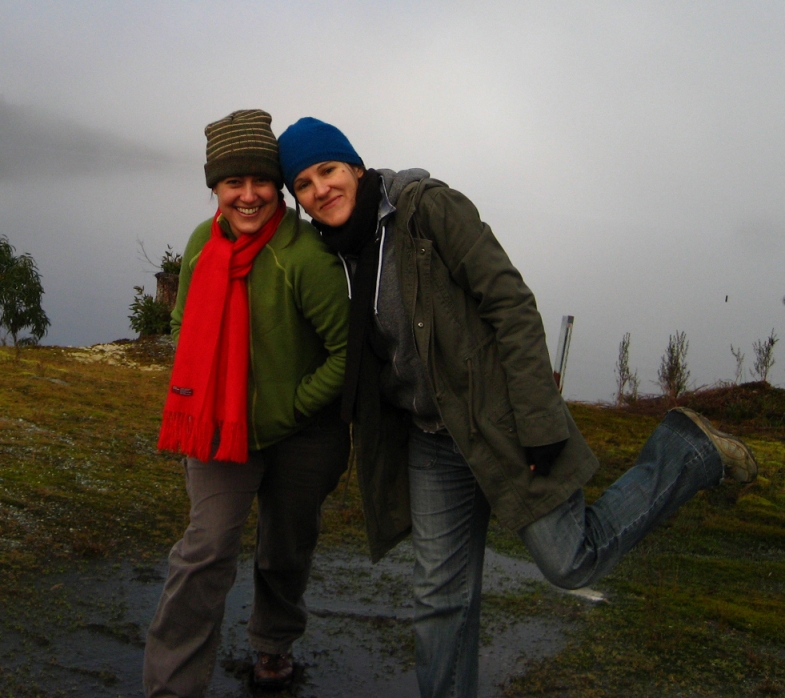

Frost on buttongrass, Cradle Mountain National Park, Tasmania.
Consider the gifts each season brings: winter’s coming, with her frosty beauty and steaming breath.
I’d been planning a thoughtful post today about the importance of community in living sustainably, and how we can build a sense of belonging with those around us. Then I spent two hours pulling my desk apart, moving the pieces an entire 1.5 metres then putting it together again, half-destroying it in the process. Now instead of reflections on interpersonal connections you’re getting a rant about poorly made modern furniture and our disposable culture.
My desk is your standard cheap office furniture piece, made of laminated fibre-board, with panels that slot together and fasten with fiddly little clips. Oh, those clips… We tried pulling the desk apart to move it to the cottage, but the clips broke apart under the screw-driver and jammed in tight, so my friend and I decided to just move the beastly thing in one piece. We manoeuvred it into the cottage with barely a millimetre to spare: one more coat of paint on the door frame and we’d really have struggled. Relieved, we moved to manhandle it into the small room I’d set aside as the study, only to discover the door to that room was smaller. $@*#!
So my desk, enormous and ugly piece of modern furniture, was left sat in my too-small living room where it taunted me, taking up far too much space. Silly object should have known I wouldn’t give up without a fight: I ducked out to the manufacturers today armed with a phone photo of the offending clips and a hopeful expression. Five minutes later I was on my way out with a fistful of new clips and instructions on how they were supposed to unclip and how to insert replacements. Yeah… even armed with clear instructions I only managed to get 2 of 12 clips out unbroken.
Eventually I finished fishing out the broken clip pieces (fine tweezers should be a staple of every tool kit, I swear) and could pull the desk apart, get it through the door, put it back together again and fasten it all up with the new clips. In the process, however, the fibreboard holes got a little bigger and the desk doesn’t hold together quite as well as it used to and I swear that when it leaves this room it will be to go to the tip.
A three-year-old piece of furniture, not built to last. Big, bulky, cheaply made and designed to be thrown away. There’s nothing I can do to repair it: no sanding back scratches, screwing on new legs or gluing together worn out joints. Just take it to the tip, a mouldering pile of plastic, timber pulp and adhesives; pointless landfill. What a pointless waste of resources.

Age should enhance and add character!
Now I look around my new home, over 100 years old, designed for durability and efficiency. The space is small but nothing is wasted; the build is solid, the materials hard-wearing. There’s a couple of pieces of old furniture that came with the place: an ancient chest of drawers and a dresser. They’ve been trashed by previous tenants, the timbers are worn, the drawer stops and runners are busted, but they’re still solid and with a little love and attention these pieces can be rescued and restored. They stand in stark contrast to my disposable desk and it’s matching bookcase.
I look at my lounge suite, another cheap modern affair, that sits overly-big and over-stuffed in this efficient space and it gets me thinking. Modern furniture is bulky: compared to older pieces of the same dimensions more area is given over to the frame and stuffing, sacrificing functional space for cheaper manufacturing techniques and fashionable appearances. My arm-chair needs to go on a diet: I could have the same seating surface for 2/3 of the space. I’m wondering if the bloat of modern furniture is there just to fill up space. As our houses got bigger and we had more room to fill, did our furniture get fatter? Are we now building over-sized houses just to fit flabby furnishings?
Here in the cottage my budget modern furnishing annoy me; their over-stuffed aesthetics grate. I can see how badly they’re ageing and realise that sooner than I find acceptable I’m going to be throwing them away. I bought cheap in a hurry on a small budget, but when the time comes to replace them I’m going to think hard about a better way of buying.
The couple of real timber pieces I do own are ageing far more gracefully than their glue-and-wood shavings companions, but my budget doesn’t stretch to hardwood and modern pine furniture means modern pine plantations with their suite of ecological problems. Trading durability for land degradation doesn’t sound like the most sustainable choice! I’ve started staking out my local op-shops and second-hand / antique stores, pricing out solid old pieces that can be restored and repaired. I’m trawling Gumtree‘s online listings for people selling treasures at under-valued prices. I’m wondering just how hard it could be to learn to build or repair simple pieces and have begged assisted access to a friends’ workshop. I’m dreaming of a laminex free future!
What are your thoughts on modern furniture? Do you share my frustrations or have you found pieces that work for you? Got any clever tips or secrets you can share?

Hobart’s heritage gives this little city a great sense of character
Note: I’m without internet access for a few weeks due to moving house. I’m doing my best to keep posting and responding to comments but it’ll be a little quieter here until I have a home connection again. Sorry for the delay in replies, I really appreciate your comments!

Raindrops on African Iris (Dietes bicolor) leaves
We need a balance of both sunshine and rain so we may flourish.
 The shape of things to come