The shape of things to come
A brighter future for people and planet

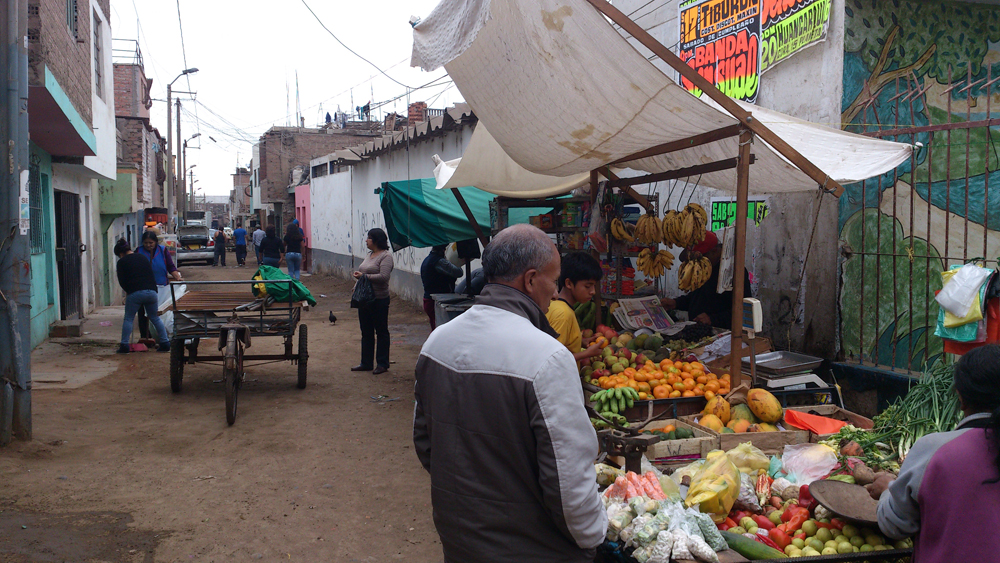
On Sunday I went with the crew from Los Pantanos de Villa wildlife reserve into central Lima, where they had a stall at the FestiFeria. The FestiFeria is a moving fair of government services that visits the poorer districts of the city and I was interested to see the sorts of things they do. As well as providing information about educational and recreational services, the fair also provides front-line services that people would otherwise struggle to access: there’s a triage unit and medical consultations, dental services, domestic violence support, notary services and registration assistance for various government initiatives and programs, or even just getting an official ID card, which can be a challenge when you’re poor and illiterate.
Each time I wander into the poorer parts it changes me. It steals a little more of my optimism and energy, my faith in humanity. It teaches me a little more about Peruvian culture and politics and the daily reality of many. Each time I come back understanding more about the causes of Peru’s social and environmental problems, and understanding how little I can actually do about any of it. This huge, tangled mess of culture, history, colonialism and human nature… I trace the problems to their roots and through my ecologist’s eyes begin to see the way the environment has influenced culture to get to this point – a society so destructive of the very resources that it depends on to survive – and shake my head at the irony of modern human behavioural ecology.
Peru’s environment is inherently unstable and unpredictable. This is a land of earthquakes and landslides, where a loose chip of glacier destroys a whole district every 50 years or so. It’s a place of rainless deserts, harsh highlands and thick jungle, where resources are frequently scarce and fiercely defended. Rainforest soils are too thin and poor to support agriculture, but traditional tribal hunting and gathering has been replaced by forestry, oil and gas extraction, illegal mining and ill-advised cattle ranching as modernity stretches its grip into the Amazon. Rain falls in great torrents that wash away the young earth of the still-rising Andes, then disappears for 7 months of hard frosts and cloudless days in alpine plains where the hearts of empires formed and fed their armies by sculpting the mountainsides into innumerable terraces . Desert life depends on the flow of Andean water both overland and underground, and on the richness of the sea. Ecologically suited for small settlements, Lima now holds almost 10 million people trying to make a living in the dust.

Caporales is a folk dance originating in Bolivia and spreading into parts of the Puno district of Peru and areas of Argentina that share the Amaya culture. The roots of the Caporales go back to the Saya, an Afro-Bolivian song and dance style that developed in the negro and mulatto slave communities brought to the Viceroyalty of Peru to work in the mines and on the plantations of the Spanish conquerors. The costumes and movements of the Caporales dance draw on the caporal – or foreman – character developed in the sayas: the mulatto elevated to the favoured position of right-hand-man, the commander of the African slaves and indentured Andean workers, and the dance itself is connected with reverence of the Virgin of Socavon or the Virgin of Candelaria, two aspects of the Virgin Mary considered sacred to miners and in Peru and Bolivia.
The Caporales dance in its modern incarnation emerged in the late 1960s and quickly gained popularity. A fusion of Afro-Andino, Amayan and Spanish elements, the Caporales is an energetic dance performed by a team of male and female dances. The striking costuming references the foreman’s traditional uniform, embellished with aspects of Spanish military uniform and the indigenous Andean love of colour and decoration, and is as flirtatious as the dance style itself. The men jump and stomp in displays of strength and stamina, while the women’s elegant twisting motions lift their skirts and showcase the strength and form of their legs and hips. The bells on the men’s boots reference the chains worn by slaves and indentured workers, in reference to the dance’s cultural roots.
The Caporales dance has become hugely popular over time, and is danced widely in Peru, with regional competitions leading up to a national dance title that is fiercely competitive and just a little Strictly Ballroom. Dance teams practice for months to choreograph and perfect their routines prior to performance. Well, normally, at least.

I shouldn’t speak so harshly of the Peruvian coastal desert. Although I’m a creature of green, hilly places, deserts can be spectacularly beautiful places to visit that have a marvellous effect of putting things into perspective and making day-to-day worries seem very small indeed.
The Peruvian coastal desert is arguably part of the mighty Atacama, which stretches 1 000 km from northern Chile and eastern Bolivia all the way along the Peruvian coast until just shy of the border with Ecuador. Covering 128 000 square kilometres, the Atacama is the driest non-polar desert in the world: the Andes to the east block the arrival of warm, rain-bearing winds, and along the coast the Humboldt Current maintains the dry, stable conditions while also keeping the temperatures cool, which is why it never rains in Lima.
The Humboldt Current is also responsible for the incredible richness of marine life on the Peruvian coast. The current drives the up-welling of deep, cold, nutrient-rich waters which supports huge levels of productivity. The sea here smells strongly of fish and algae and absolutely teems with aquatic life. The resulting abundance of seafood, coupled with the cool climate and river valleys carrying fresh water down from the Andes, has meant the Peruvian Coastal Desert has been home to a variety of human civilizations for thousands of years. Read More
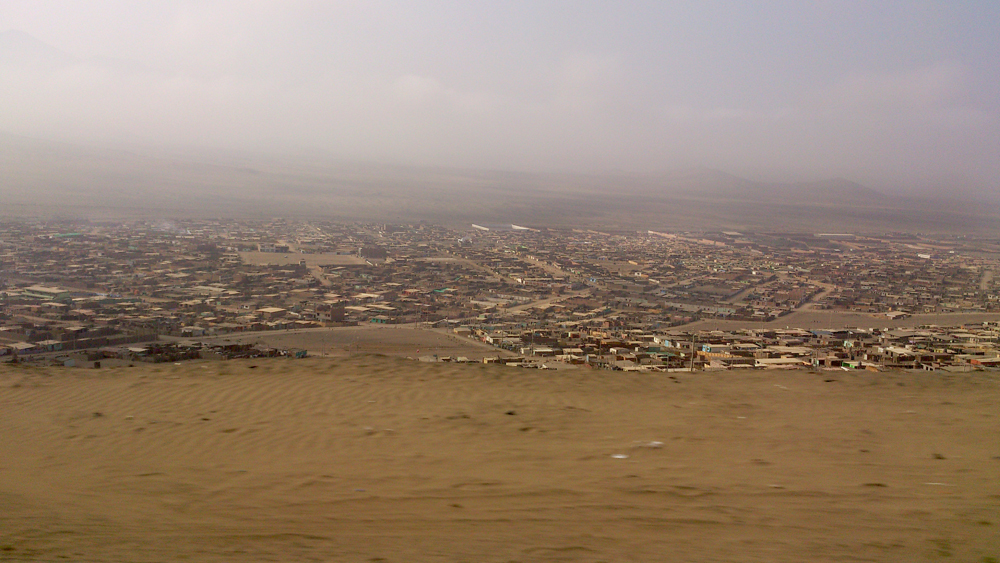
Last week I passed the half-way point of my project here in Lima, so it seems a good time to reflect on the six months that have been and to consider what the rest of my year here may bring.
It hasn’t been easy. Really: under-statement. As some of my posts have documented, I’m struggling with the day-to-day reality of life here, as well as with the bigger issues of environmental management and social justice in Peru.
On the daily level city living just isn’t for me. I dislike crowds and noise, and enjoy spending my time hiking, gardening and interacting with my local community. Here I’m caught in a city of almost 10 million people, bang smack in one of the driest deserts on the planet. The city is an enormous sprawling beast of concrete and snarling traffic jams, growing rapidly as squatter-towns spring up on the urban fringes. The only green places are the manicured parks in the wealthier suburbs and I miss the mountains and wild places so readily accessible back home. Read More
This planet, this remarkable pale blue dot, is our one and only home.
There is no nobler cause than to take care of it, to work towards a greener, fairer, cleaner future.
Let’s create the kind of world we want to live in: every day, every choice counts.
This is our home and we all can shape it.

This time last year I was in Cusco, where I stumbled on a street parade of traditional dancers after my Spanish lessons one day. The colour and costumes and friendliness of the people delighted me as I raced around with naught but my phone, trying to capture it all. These are the photos I took that day, as I skurried around behind-the-scenes, phone in hand, talking to the performers and trying to capture the event through their eyes.
If all has gone to plan, right now I should be in Pisac, not too far out of Cusco, tucked away in a curve of the Urabamba River in Peru’s Sacred Valley. Read More
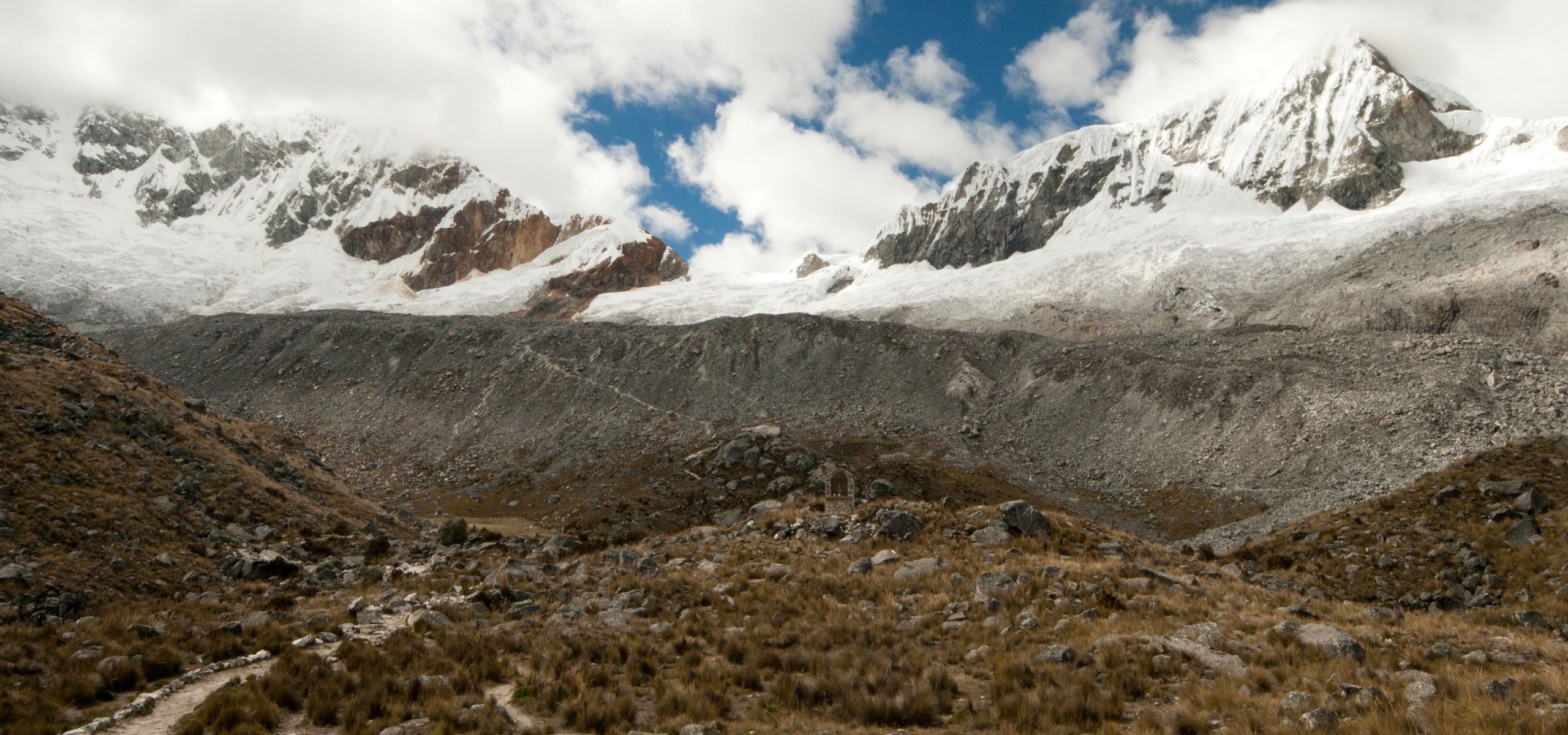
Long ago, almost lost to the mists of memory, I went on magical journey to a far away land… Ok, so it was only in December, but it feels like it was eons ago, and it really was pretty magical. I climbed onto a bus one night in Lima and found myself the next morning in another world. One where it was raining; and cold. As I stepped sleepily off the bus and eased the cricks out of my spine, both these things made me smile: I was in the sierra, the central valley of the Andes. My Peru.
A friend and I had made the trip up to Huaraz to see in the New Year from lofty heights and to spend a few days trekking through one of the most spectacular parts of the generally rather spectacular Peruvian Andes: Huascaran National Park. The park, named after Peru’s highest peak which lies within it’s bounds, covers 340 000 ha of the steep and beautiful Cordillera Blanca (White Range) of the central Andes, in Ancash province. First protected in 1977, the park was given World Heritage status in 1985 in recognition of its high ecological and cultural values. Like most everywhere in Peru, Huascaran National Park has been occupied and altered by humans for thousands of years, with the landscape shaped by the interactions of people with their environment. Cultures that have called the region home include the Chavín, Recuay and Wari peoples before the region was conquered by the Inca Empire in the 1460s, and then the Spaniards from the 1530s.
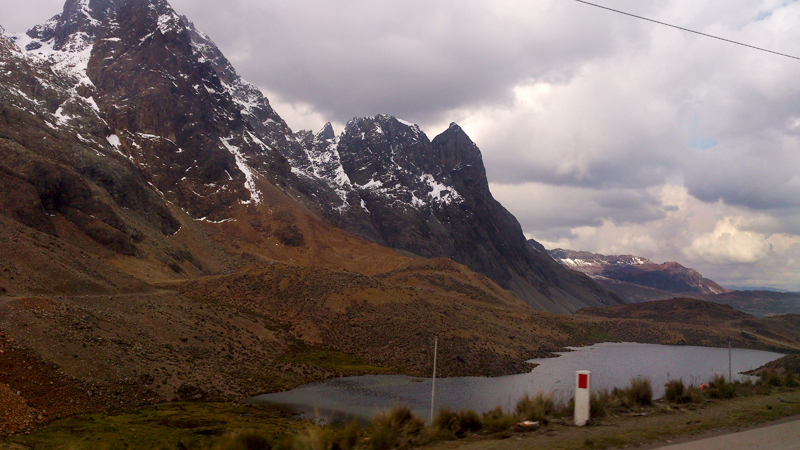
I have been up in the sierra on field work. It was an interesting and somewhat dramatic trip, for various reasons, and has left me with a lot to think about.
We came back yesterday: 8 hours on the bus between Huancayo and Lima. It was the first time I’ve made the trip up through the western side of the Andes in daylight. I’ve always been on the overnight buses previously. This time I was wide awake as we passed through the extensive mining concessions up in the high mountains.
Mining is dragging Peru out of poverty at the same time as it is destroying the natural wealth of the country. Mountainsides are pulverised and catchments are contaminated as the industry chews up the landscape with shocking speed. Legal and illegal mines alike take huge bites from the earth in the rush to consume its riches.
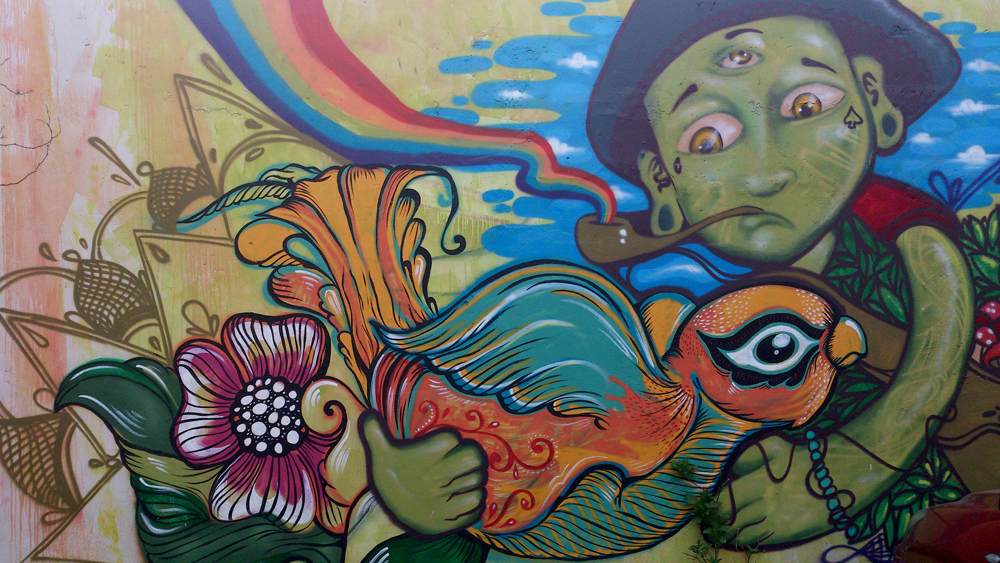
So here I sit in a specialist coffee chop, tucked away underground, at Larcomar, the boutique brand outdoor mall on the edge of the sea cliffs of Miraflores. Larcomar is a celebration of rampant capitalism: it is consumerism taken to extremes, where international brands and local high-end stores cater to tourists and wealthy Peruvians in a bubble so detached from the reality of this developing world country. Larcomar is consumerism packaged as holiday hedonism, as if there were true pleasure and unique experiences to be found in the purchase of superfluous, luxury stuff, as if there was some point to overpriced designer brands and S/10 Starbucks “coffee”.
What am I doing here? I came looking for a place to sit and write while Roxana the cleaning lady takes over the house; somewhere I could grab some lunch and a passable coffee and access free wi-fi while I took some time out to order my thoughts. This little café, tucked away from the worst excesses of the place, does a reasonable espresso or slow-drip filter coffee, but I’ve ordered a fancy floral green tea instead. I can deal with hipster coffee pretension: I know my own kind. Upstairs in the sunlight, though, that’s a foreign world.
Coming to Larcomar is to magnify the internal ethical conflicts I navigate each day in Lima. I am from this world: disposable income, the budget for quality, everything clean, neat and western. I intrinsically understand the rules. This place could be anywhere yet always feel familiar. I chose to come here despite the disdain I feel for the place. It stands for everything about my own culture that grates at me: the privilege, the waste of resources, the mindlessness of over-consumption, the idea that such pointless consumption is somehow fun… people sleep-walking through a life of immense privilege never stopping to realise the true price.
So why am I here? Read More
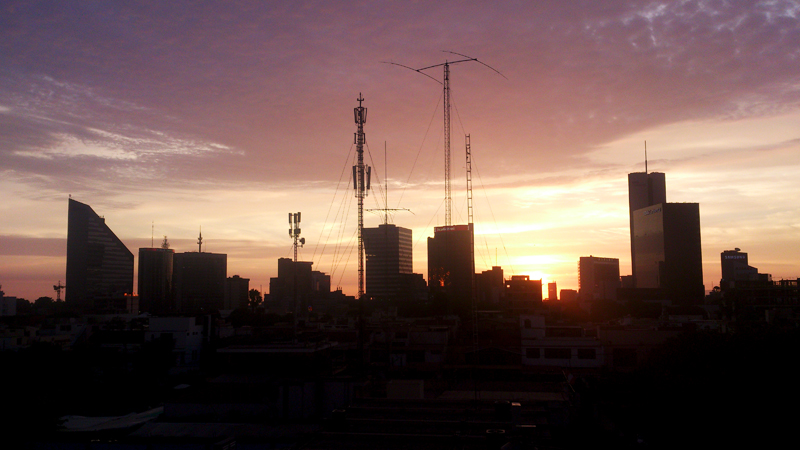
It might sound crazy, but sometimes I forget I’m living in Peru. The part of Lima that fills my day-to-day world isn’t so different from any other city. “Home” is in the expat precinct, a clean, safe world of apartment buildings, multi-national businesses, chain-store shops and fancy restaurants, as modern and soulless as any other young tourist city. It’s the Surfers Paradise of Peru, equally vapid and self-obsessed as Australia’s beachside tourist centre.
I live in an apartment that would only stand out back home for the cheapness of the rent given the enormous size of the place. Each week-day I walk a couple of blocks to the express-way and take the city express bus to the financial hub a few suburbs north, then walk through the commercial zone and leafy-green residential strip to the Government Campus where I work. I sit in my partitioned space in our open-plan office and do a job that’s not all that different from the work I’ve done back home, bantering with my lovely, educated and passionate colleagues. At night I bus home again, cook dinner in my modern kitchen, mess about on the internet and go to bed. It’s a life so ordinary it could be happening anywhere, if it weren’t for the Spanish and the noise of the place. Read More
 The shape of things to come